Showing posts with label Cades Cove. Show all posts

Sunday, April 7, 2013

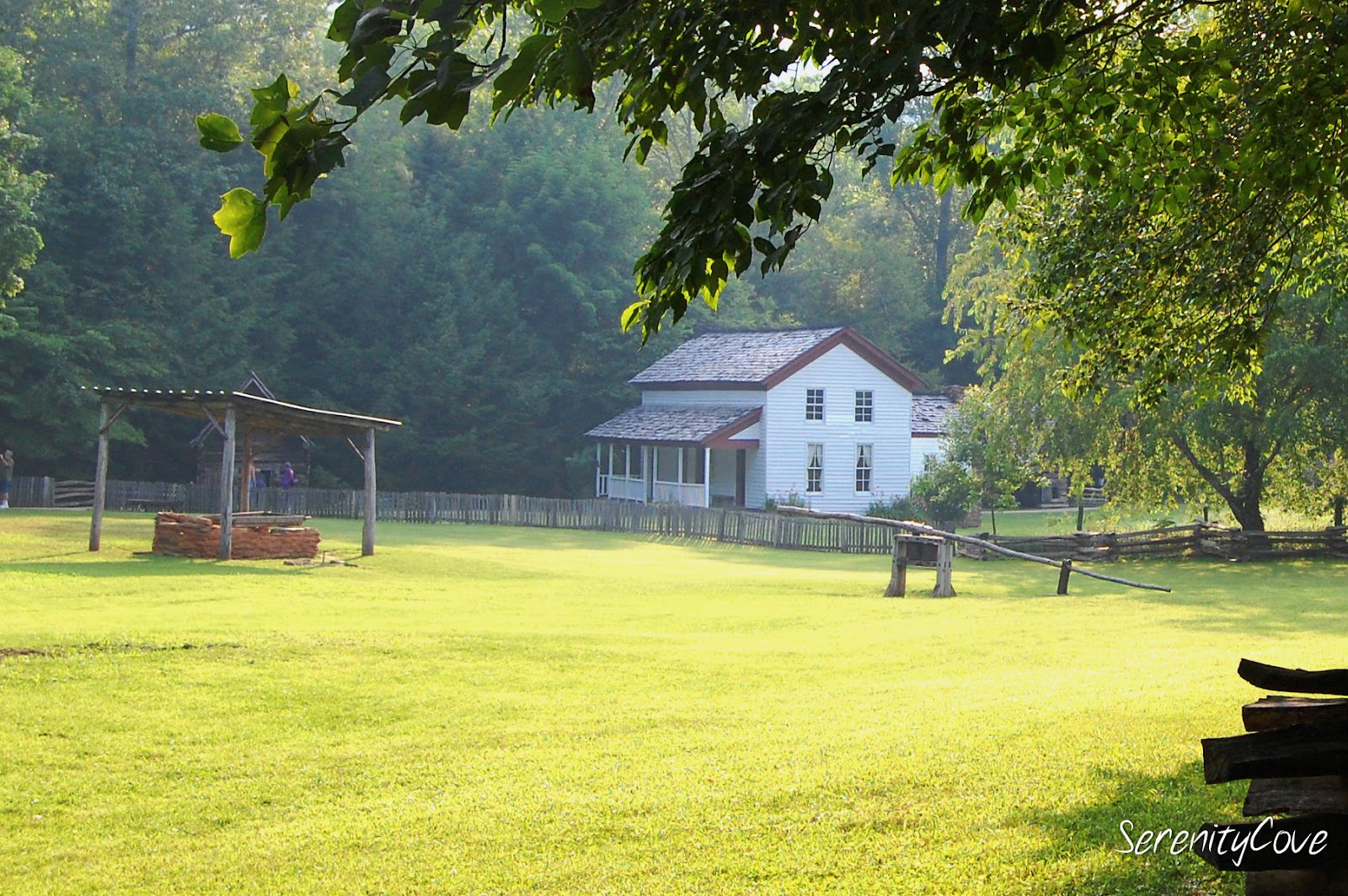
The Elijah Oliver Place


Elijah Oliver was born in Cades Cove in 1824 and was the son of John Oliver, the first white settler in the cove.
Today you can visit the Elijah Oliver Place via an easy 0.5 mile walk from the Cades Cove loop road. It's the most remote of the cabins in Cades Cove but it's a short, pleasant walk and will give you a glimpse of what life was like for the early pioneers of Cades Cove.  It's just far enough away from the road to discourage a lot of tourists (most of which never get out of their car) from making the hike back in.

Elijah moved his family out of the cove prior to the civil war, but returned later and bought this property in 1865.


I'm not sure why, but in all the years we've been coming to the cove, this is the first time we were here.
 Located in a clearing, surrounded by a beautiful forest, I can't imagine a more picturesque setting to build a cabin and raise a family.
  I get nostalgic for the old ways of life when I visit places like this, although I realize nothing was easy back then and they worked very hard to make a living. The Olivers, like most families in the area were almost entirely self-sufficient and raised nearly everything they needed.

Oliver was also a deacon in the Cades Cove Primative Baptist Church for 37 years.

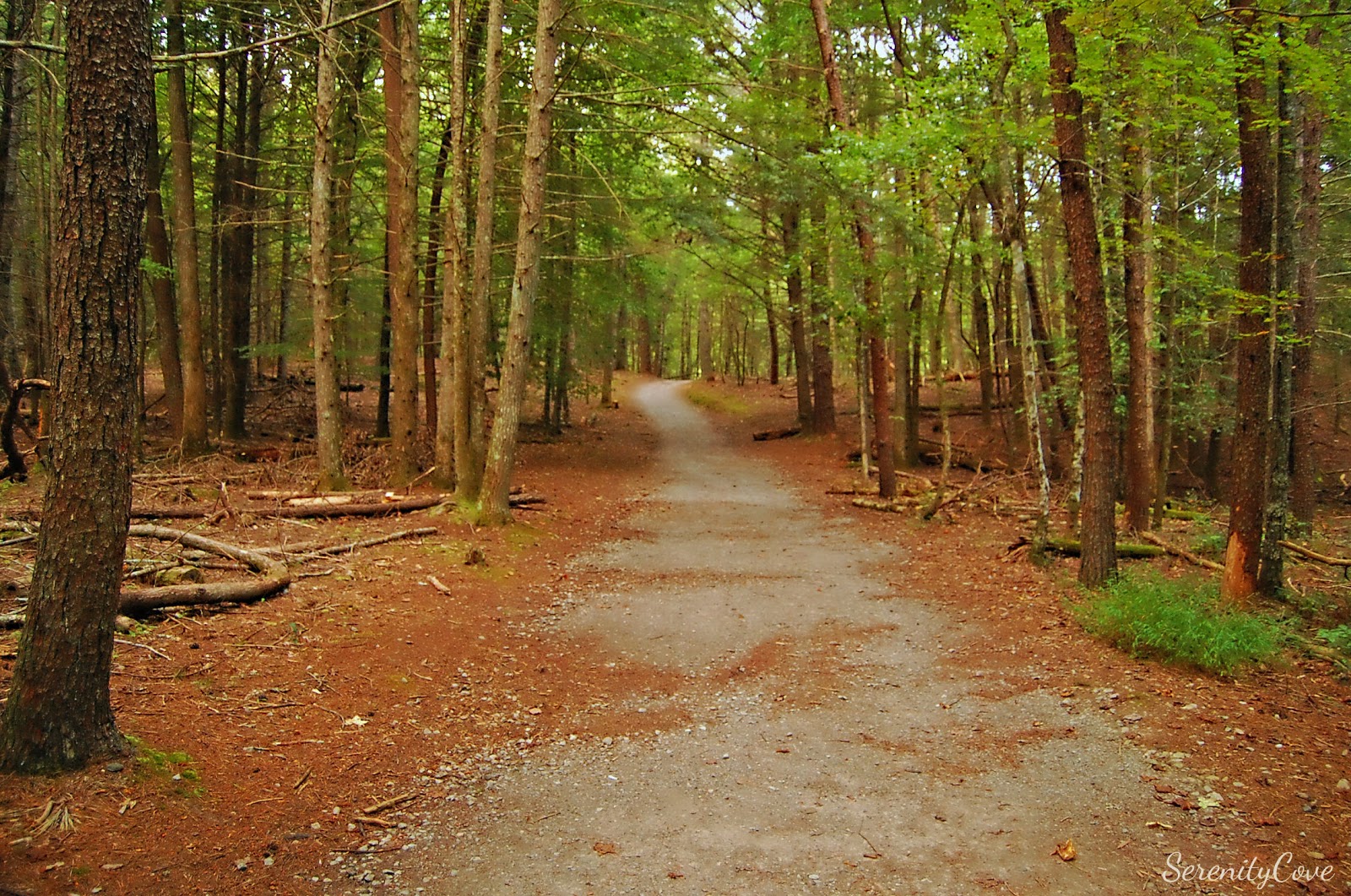
Parking for the Elijah Oliver place is on the left at milemarker 4.5 from the beginning of the loop road. The trail starts across the road from the parking area. The trail is a wide graveled path that starts at an open area and soon crosses a stream on a narrow foot bridge.


The Myers Barn
 At 0.2 miles you will pass a large hay barn built in the 1920s.

A few turkeys were on hand to greet us when we arrived, but soon ambled off into the woods.

The original cabin was enlarged when Elijah purchased another cabin and attached it to their home. This was the kitchen and the breezeway created between the two cabins was called a "dog-trot". I guess this was the eighteen hundreds version of the split-level!!

The stairs leading up from the kitchen into the main living area.

Cades Cove people were well known for their hospitality and kindness. The room on the right side of the porch was called a "Stranger Room" and was used for overnight guests passing through the area.


 The fireplaces in the house.


 I think the little building to the far left was a smokehouse.

Springhouses were built over the source of a spring.  The spring water flowed into a trough inside the springhouse and provided storage for food that would otherwise spoil.
This brought back a lot of memories. The house my grandma lived in when I was a little girl had a spring in the basement and that's how she kept her food cold until she got a gas refrigerator. My grandma was amish and never had electricity.

The thin log coming out of the front continues to channel the water out of the springhouse.


One last look back as we are leaving. Corn crib in foreground and barn in background.

On the way back to the trailhead we heard a pack of coyotes howling not very far away.  If you have never heard coyotes......well, it makes the hair on the back of your neck stand up. It was a little unnerving but we weren't too concerned until another pack on the opposite side responded. I was sure coyotes were going to burst out of the woods and have me for dinner, but I'm told coyotes are more afraid of humans than we are of them. I don't believe that of the Cades Cove coyotes though because they have become too accustomed around people and expect handouts from them.


I never get tired of the views in Cades Cove. To me it's a little bit of heaven on earth.

Can you imagine living here and seeing this every day?  I just can't get enough of these mountains!


Wednesday, May 16, 2012

Cades Cove Part 2

A few weeks ago I did a post on our favorite place to visit in the Smoky Mountains focusing on the historical buildings preserved in Cades Cove. In this post I will show some of the scenery in the cove.
The best time to drive through the cove in my opinion is early morning or evening, two or three hours before dusk. We give ourselves plenty of time because we stop here and there just to soak in the beauty.
Grazing
Something we have not done is horseback riding but there is a stable here if you like to ride.
An excellent way to see the Cove is to bike the eleven mile loop. Bring your own or I think they can still be rented there. The best time to do that is Wednesday or Saturday morning May-September, they close the road for vehicular traffic until 10:30. That gives bikers the road to themselves for a few hours. One time we did this we counted 100 deer, after that it was just like yeah, there's another one.


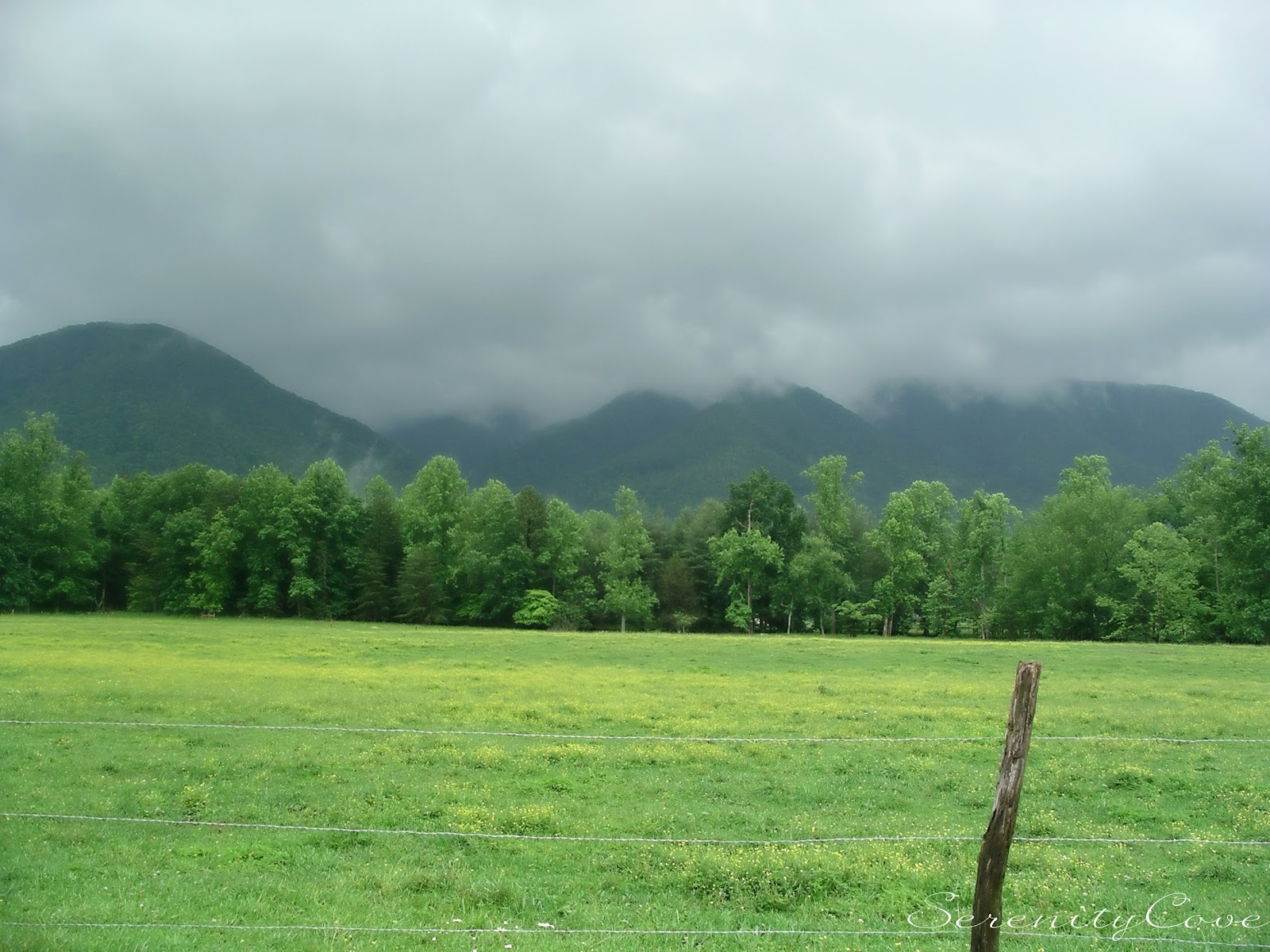
I love the low-hanging clouds that envelop the mountains after the rain has passed.....

and the early morning fog that lingers in the valleys.


Foggy Morning on Hyatt Lane


Dawn in the Cove


Judging by this Coyote's behavior, he's been fed. Feeding animals in the Cove or anywhere in the Park is illegal and can result in a fine of $5,000!! It's sad but a lot of animals that are fed eventually end up being moved from the park or euthanized because they lose their fear of humans.

We see bears frequently in the Cove, but I still have not been able to capture a great photo. It's always too far away, too dark, hidden in tall grass or up in a tree. Plus whenever there is a bear, it creates such a jam of traffic by the time we are able to get to where the bear was, it's gone. Nevertheless, It's always exciting to catch a glimpse of one. The most we ever saw in one night is twelve.

Why did the turkey cross the road?

This picture and the next few are taken at our favorite scenic pulloff in the cove. Wouldn't you just love to have a cabin right here? I would!!


 I'll take these rustic split rail fences any day over barbed wire.

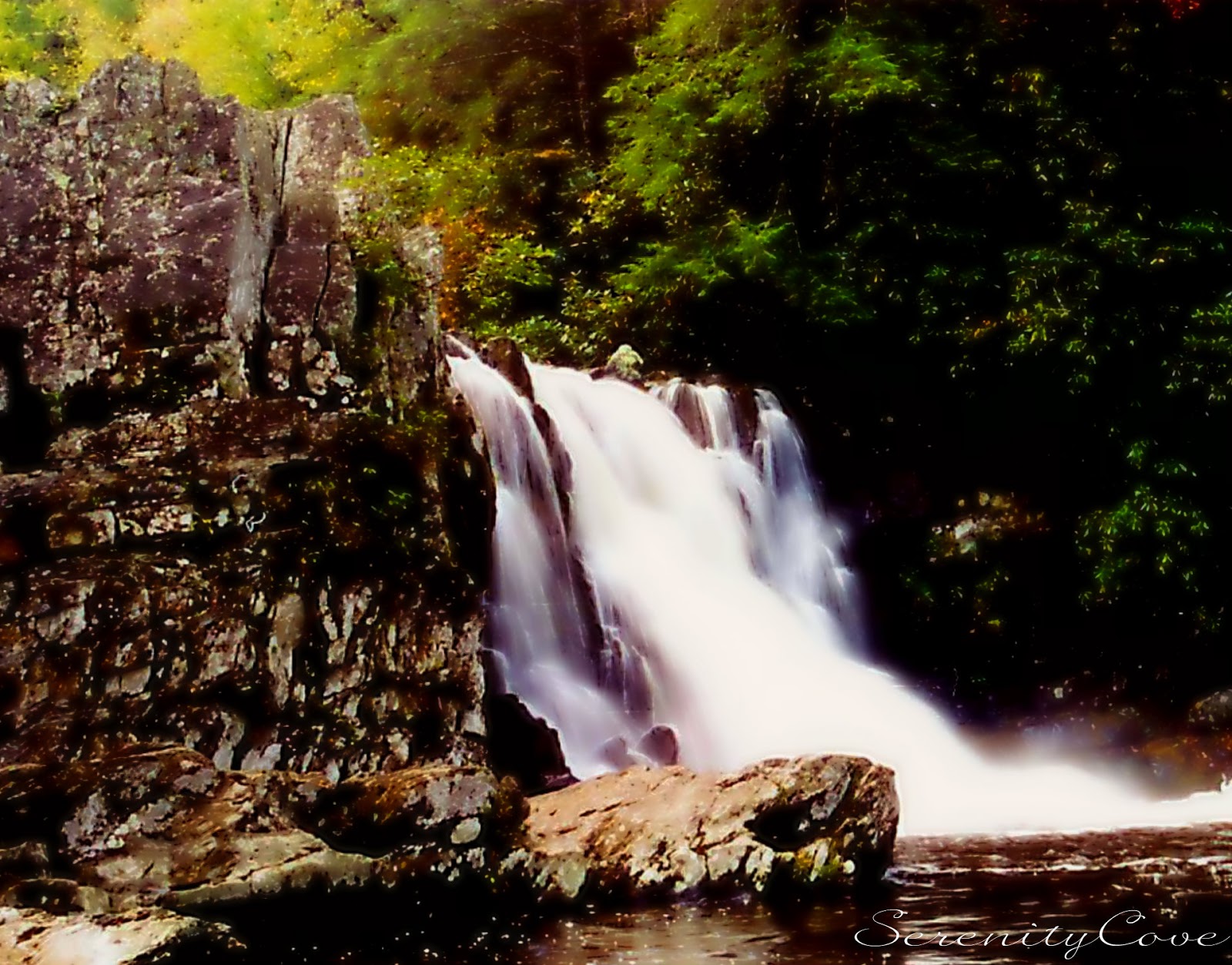
Abram Falls
A five mile round-trip hike leads to Abram Falls, named after Cherokee Chief Abraham who's village once stood several miles downstream.

Cades Cove Sunset

My next Smoky Mountain post will be our hike to Gregory Bald to see the Azaleas.

Wednesday, April 11, 2012

Cades Cove Tour Part 1

Cades Cove in the Smoky Mountains is a 4000 acre valley surrounded by mountains and has become the most popular destination for visitors in the park, attracting over two million visitors a year.
I can't begin to describe the beauty in Cades Cove. It is my all time favorite place in the Smoky Mountains!
Wildlife is abundant with plenty of white-tailed deer, black bear, turkeys and coyote roaming the open fields and forested mountains of the cove.
It is believed the cove was named after an Indian leader known as Chief Cade. The first Europeans settled in the cove around 1818 with John Oliver being the first settler.
Population in the cove peaked at 685 by 1850. With the soil growing tired, and new states opening in the west, many families moved out in search of more fertile frontiers. By 1860 only 269 people remained. Slowly the numbers rose to about 500 just before the park was established in the late 1920s.
Today the cove has been preserved to look much like it did in the 1800s with some of the original homesteads, churches and farmland depicting the pioneer way of life. An 11 mile loop road winds it's way around the cove with opportunities to stop and visit the preserved homesteads and has been referred to as an open-air museum. To really experience the cove, don't just drive through but get out of your car and go exploring.

The John Oliver Place
About one mile into the loop is the first settler John and Lurany Oliver's cabin.  Oliver's original cabin stood 50 yards behind this cabin which was built for his son.

Primitive Baptist Church
This church located at 2.5 miles into the cove was organized in 1827 and met in a log building until 1887 when this white frame church was built. Many people by-pass this church because it's location is set off of the main road a little way. It is so quiet and peaceful and it's in such a picturesque setting. It's worth the little side trip to see it.

Methodist Church

Back on the main loop road the next stop is the Methodist Church. This church was organized in 1820 and also met in a log structure until 1902. J.D. McCampbell a blacksmith and carpenter, built this church in 115 days for $115.00. He later served as the preacher of the church.

Missionary Baptist Church

This church was formed in 1839 by members of the Primitive Baptist Church who were dismissed because they favored supporting missionary work. This building dates from 1894.


John Cable Mill

Located half-way around the loop road is the visitors center and the historic Cable Mill area. This is probably the most popular stop on the Cades Cove tour. Mills powered by a waterwheel were an important feature in the community because it could grind corn much faster than tub mills. This mill is still in operation April-October.

Gregg-Cable House
Built in 1879 by Leason Gregg, this house served it's owners as a store, boarding house and private residence and may have been the first framed house in Cades Cove. Various buildings have been moved from elsewhere in the cove and placed here including the Cane Mill seen on the right and the Molasses Furnace on the left in the photo above.


Corn Crib

Gregg-Cable Barn

Henry Whitehead Place
When Matilda Shields Gregory was deserted by her husband, her family quickly built her a small cabin to give her shelter. Given the haste with which it was built, the cabin was one of the roughest in the cove with rough-hewn logs and a rubble stone chimney.


 When Matilda got remarried to Whitehead, he built her one of the nicest cabins in the cove directly in front of the original one. Their new home had square-sawn logs and a brick chimney, rare for the Smokies. In those days if you wanted bricks you had to make them yourself.

This pair of dwellings represents the roughest and the finest log construction in the Smokies.


Dan Lawson Place
Dan Lawson was an influential citizen of the cove and considered to be the wealthiest resident. He was a postmaster and served as Justice of the Peace. He acquired a lot of properties and owned more land than anyone else in the cove. This cabin was built around 1856 and had also one of the few brick chimneys for that time.


The Tipton Place
"Hamp" Tipton had this house built a few years after the Civil War.


Across the road from the Tipton Place is a Cantilever Barn, once a common site in the Smokies. The overhang allowed protection for outside animals and equipment. This one is a replica built in 1968.


Carter Shields Cabin
This is the last stop on the loop and was home to George Washington "Carter" Shields. Nestled in a little cove surrounded by dogwoods makes this one of the prettiest settings in the cove.

To be continued.
 In part 2 I will focus on the scenic side of the cove.